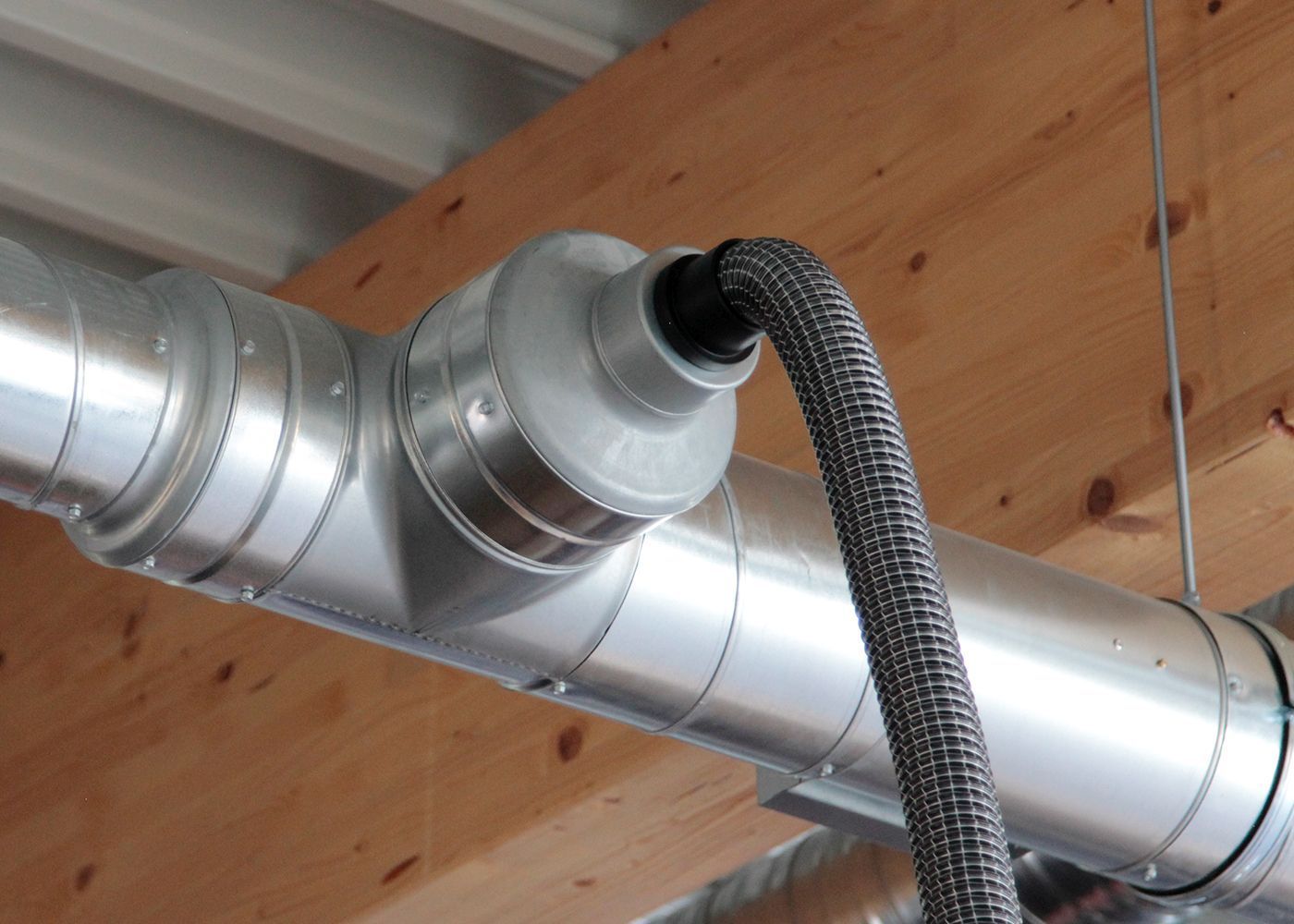























































Leakage test of ventilation systems / air duct systems
Other topics from this section:Proper evaluation of ventilation system energy efficiency involves conducting leakage tests to identify any potential issues. Air duct leakages can result in unregulated airflow, noise, heat loss, and the introduction of contaminants.
The tightness classes apply to the assembled air duct system as well as to individual components.
For component tests, the classification and testing of tightness is described in the following DIN standards:
-- DIN EN 12237 for round air ducts
-- DIN EN 1507 for rectangular air ducts
-- DIN EN 13180 for flexible air ducts
-- DIN EN 1751 for throttle and shut-off elements
-- DIN EN 13403 for non-metallic air ducts made of insulating boards
-- DIN EN 15727 for components not covered by the other standards
Proper evaluation of ventilation system energy efficiency involves conducting leakage tests to identify any potential issues. Air duct leakages can result in unregulated airflow, noise, heat loss, and the introduction of contaminants.
The tightness classes apply to the assembled air duct system as well as to individual components.
For component tests, the classification and testing of tightness is described in the following DIN standards:
-- DIN EN 12237 for round air ducts
-- DIN EN 1507 for rectangular air ducts
-- DIN EN 13180 for flexible air ducts
-- DIN EN 1751 for throttle and shut-off elements
-- DIN EN 13403 for non-metallic air ducts made of insulating boards
-- DIN EN 15727 for components not covered by the other standards
When measuring leaks with the Wöhler DP 700 Leakage Tester, the device determines the leakage air flow in relation to surface area and pressure.
According to DIN EN 12599, the on-site leakage test of ventilation systems should be carried out during the installation phase if possible, as the systems are then still easily accessible for localisation of the leakage and any repairs.
When carrying out the leakage test, it is necessary to plan the measuring points precisely. Care should be taken to ensure that measurements are taken on all main air ducts and on supply lines with high requirements (bedrooms, etc.).
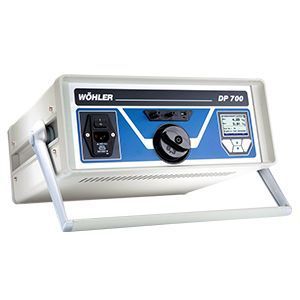
Enter the test pressure and the inner surface area, the measuring device then automatically determines the air leakage flow in relation to the surface area and pressure, including limit value comparison.
CARRYING OUT THE LEAKAGE TEST OF VENTILATION SYSTEMS
A leakage tester, such as the Wöhler DP 700 Leakage Tester, is required to carry out the test. For the measurement, the air duct network is usually divided into different sections. The pipe sections to be tested must be carefully sealed.
The leakage tester uses a blower to generate an overpressure in the appropriately sealed sections of supply air ducts and a negative pressure in exhaust air ducts, which should be as close as possible to the centre of the average operating pressure. DIN EN 12599 suggests +200, +400 or +1000 Pa as positive pressure and -200, -400 or -750 Pa as negative pressure. The air volume flow required for this corresponds to the leakage air flow, for which limit values are specified in the above standards depending on the air duct surface and the test pressure.
The test pressure and inner surface area are selected by the user. The leakage tester then automatically calculates and assesses the airflow leakage in relation to the surface area and pressure, including comparing it to the limit value. If any leakages are detected, a visual inspection of the ventilation system should be conducted after the leakage test. Smoke pens or a fog gun can be used to expedite the detection of leakages. A comprehensive report must be generated to document the handover. To fulfill this requirement, reports must be prepared for all tasks (such as completeness checks, functional tests of the ventilation system, functional measurements on the ventilation system, and special measurements) in accordance with DIN EN 12599.
Summary:
- Avoiding leakages to ensure proper operation and energy efficiency of the system
- The air duct network is usually divided into different sections for the measurement
- Documentation of the data is always required in the relevant regulations